
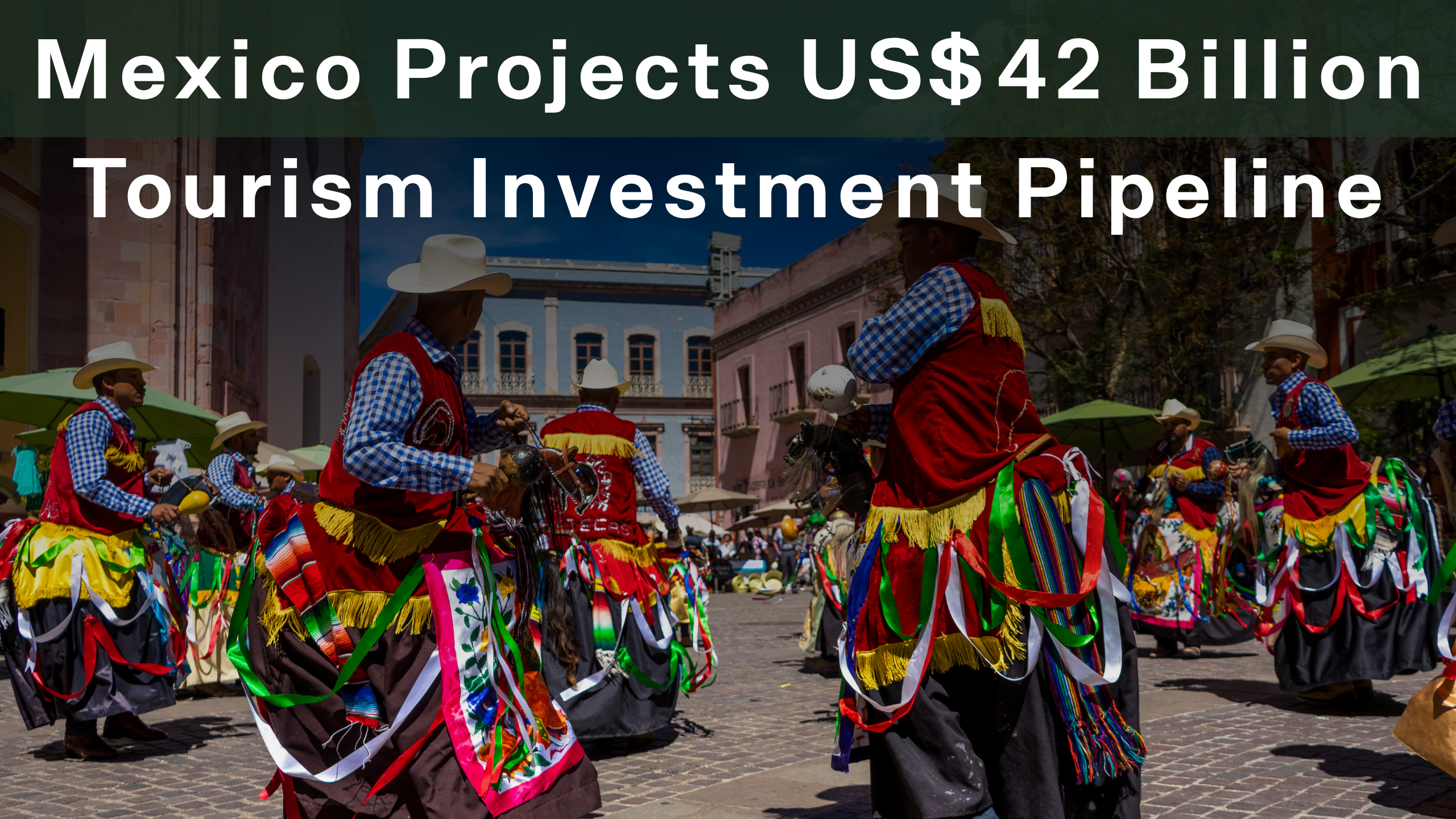
Mexico Unveils a US$42 Billion Tourism Investment Pipeline Through 2030
April 30, 2026 · Moleti Editorial Team
Mexico's federal government has put a number on its ambition for tourism: US$42 billion, spread across 773 active projects and a timeline that runs to 2030. The figures, presented by Tourism Minister Josefina Rodriguez at the 50th edition of Tianguis Turistico Mexico 2026 in Acapulco, represent both a significant scale-up from previous portfolios and a clear statement of national priority.
The pipeline marks a 10 percent increase in the number of projects and a 16 percent rise in total investment value over the prior portfolio. It sits within a broader US$150 billion federal economic strategy known as Plan Mexico — the government's overarching framework to strengthen private investment and regional development across strategic industries.
We are beginning a new stage for tourism in Mexico, with investments that not only strengthen the sector but also generate well-being, regional development, and new opportunities for thousands of families. — Josefina Rodriguez, Minister of Tourism
Where the Investment Is Going
The 773 projects are concentrated across 10 priority states: Quintana Roo, Nayarit, Jalisco, Baja California Sur, Guerrero, Nuevo Leon, Hidalgo, Baja California, Sonora, and Yucatan. Individual state allocations range from US$1.3 billion to US$8.3 billion, reflecting the depth of investor interest in both Mexico's most established coastal destinations and its emerging regional markets.
Approximately 60 percent of the projects are concentrated in hotel and residential infrastructure — precisely the asset classes most directly relevant to buyers and investors in Mexico's tourism corridors. States with the heaviest concentration of these projects include Quintana Roo, Yucatan, Nayarit, Jalisco, Guerrero, Sonora, Hidalgo, and Baja California Sur.
A New Tool for Investors
Alongside the investment figures, the forum marked the debut of Mexico's first official tourism investment guide, developed jointly by FONATUR, CAF — the Development Bank of Latin America — and UN Tourism. The guide is designed to support both national and foreign investors by providing a consolidated resource on financing options, environmental requirements, and technical standards for tourism development projects.
CAF's Director for Mexico, Oscar Rueda, described the conditions as favorable. Mexico possesses, in his assessment, solid tourism demand, cultural wealth, significant biodiversity, improving transport infrastructure, and a government planning framework that supports long-term sector expansion.
FONATUR, Mexico's national tourism fund, has been repositioned within this cycle to support mixed investment models — combining public and private capital in a structure designed to de-risk entry for international investors and accelerate project execution.
The 2030 Target — and What It Means
The investment pipeline is anchored to a specific national ambition: Mexico intends to rank among the five most-visited destinations in the world by 2030. Achieving that target requires not only more arrivals but higher visitor spending and a diversification of the country's tourism offer beyond its traditional beach-and-sun model.
The infrastructure investment being announced now is the supply-side response to that demand trajectory. More hotel capacity, more residential tourism development, expanded transport connectivity, and upgraded destination infrastructure — across both established markets like the Riviera Maya corridor and emerging destinations that are just beginning to attract international capital.
What This Signals for the Riviera Maya
Quintana Roo's presence at the top of the priority states list is not incidental. It is the country's highest-appreciating real estate market, its most visited coastal corridor, and the state most deeply integrated into Mexico's international tourism economy. A federal investment pipeline of this scale — with Quintana Roo among the largest individual state allocations — means the physical and digital infrastructure that sustains property values in the corridor will continue to be expanded and improved.
For buyers evaluating long-term positions in the Riviera Maya, the US$42 billion pipeline is not an abstract policy announcement. It is the government's commitment — backed by international development institutions — to sustain and deepen the conditions that make this corridor one of the most compelling real estate markets in the Western Hemisphere.